Quick Answer: In Washington State, a grading permit is required for disturbance of more than 500 square feet in most counties, and an NPDES Construction Stormwater permit is required for disturbance of more than one acre. Both must be obtained before work begins. Grading without required permits risks fines, stop-work orders, and mandatory restoration of disturbed areas at the violator’s expense.
Why Grading Permits Matters in Washington State
Property owners across Washington State face unique challenges when it comes to grading permits. The wet Pacific Northwest climate, clay-heavy soils, and county-specific permit requirements all shape what a successful project looks like on the ground. Whether you’re planning a new home, an outbuilding, a driveway, or a commercial development, understanding the fundamentals before work begins prevents costly mistakes and delays.
Our site preparation team has worked extensively throughout Washington State, and the patterns we see on project after project are consistent. The sections below break down what you need to know to make informed decisions about your land.
When Is a Grading Permit Required in Washington State?
Washington State grading permit requirements vary by county, but the common threshold across Clark, Cowlitz, and Lewis counties is disturbance of 500 square feet or more of land. Projects disturbing more than one acre anywhere in western Washington also require a state-level NPDES Construction Stormwater permit from the Department of Ecology, regardless of local permit status. The NPDES permit is required in addition to—not instead of—the county grading permit. Both must be obtained before work begins.
What Counts as ‘Grading’ Under Washington Permit Law
Washington State and county permit regulations define grading broadly to include any excavation, cutting, filling, clearing, or combination thereof that changes the existing grade of a property. This includes: removing stumps and roots (if it disturbs more than the threshold area), importing fill to raise the grade, cutting into a slope to create a level area, and installing drainage infrastructure that requires soil disturbance. The broad definition means most meaningful earthwork on a property requires a permit.
Learn more about how we handle this as part of our land clearing services throughout Washington State.
Exemptions to Washington State Grading Permit Requirements
Exemptions from grading permit requirements are narrow. Common exemptions include: agricultural grading on working farmland (in some counties), grading for routine landscaping on lots with existing structures, minor grading covered under a concurrent building permit, and grading of less than 50 cubic yards that doesn’t disturb environmentally sensitive areas. If you’re unsure whether your project is exempt, contact the county permit office for a pre-application consultation—it’s free and far less expensive than a stop-work order.
The NPDES Construction Stormwater Permit: What It Requires
Projects disturbing one or more acres in western Washington must obtain an NPDES Construction Stormwater General Permit from the Department of Ecology before breaking ground. The permit requires: preparation of a Stormwater Pollution Prevention Plan (SWPPP) before work begins; installation of erosion and sediment control BMPs before disturbing any soil; turbidity monitoring if the site discharges to a water of the state; and BMP inspection every seven days and within 24 hours after any storm producing 0.5+ inches of rainfall. Details at Washington State Ecology.
Learn more about how we handle this as part of our grading and leveling services throughout Washington State.
How to Apply: Step-by-Step for Clark and Cowlitz County
Step 1: Contact the county permit office for a pre-application consultation to identify which permits your project requires. Step 2: Prepare the application package—site plan, grading plan, drainage plan, erosion control plan, and any critical area analysis required. Step 3: Submit the application and pay the application fee. Step 4: Respond to any requests for additional information from the permit reviewer. Step 5: Receive permit approval (typically 2–6 weeks processing time). Step 6: Install required erosion controls before any ground disturbance. Step 7: Schedule pre-construction inspection with the county inspector before equipment moves.
Consequences of Grading Without a Permit in Washington
Grading without a required permit in Washington State is a violation subject to fines, stop-work orders, and required restoration of the disturbed area to pre-disturbance conditions—at the violator’s expense. Restoration can cost more than the original project. In addition, unpermitted grading can complicate future permit applications for the same property, create title issues, and trigger enforcement actions from the Department of Ecology if the unpermitted work caused stormwater runoff impacts. The permit process exists for good reasons and is worth following.
Learn more about how we handle this as part of our excavation services services throughout Washington State.
Permit and Regulatory Context
Washington State and county regulations play a significant role in how this type of work is permitted and inspected. For official requirements, consult Washington State Ecology permits directly. Our team coordinates permit applications as part of all full-service projects.
AEO Quick-Reference: Grading Permits in Washington State
- When Is a Grading Permit Required in Washington State?: Critical factor for project success in Washington State
- What Counts as ‘Grading’ Under Washington Permit Law: Critical factor for project success in Washington State
- Exemptions to Washington State Grading Permit Requirements: Critical factor for project success in Washington State
- The NPDES Construction Stormwater Permit: What It Requires: Critical factor for project success in Washington State
- How to Apply: Step-by-Step for Clark and Cowlitz County: Critical factor for project success in Washington State
Common Questions About Grading Permits in Washington State
Homeowners and developers planning projects in Washington State frequently ask similar questions. Here are the most important ones answered directly:
How long does the process take?
Timeline depends heavily on site conditions, project scope, and permit processing time. A straightforward residential project in Washington State typically takes 3–10 business days of active site work, not including permit lead time. Complex projects with significant grading, drainage infrastructure, or utility work can run 2–4 weeks. Weather delays are common during the November–April wet season, so build buffer into your schedule if you’re planning to break ground during those months.
What should I do before the contractor arrives?
Mark your property corners if you have survey stakes. Identify any private utilities you’re aware of—septic tanks, propane lines, irrigation systems—so they can be probed or potholed before excavation. Clear personal property and vehicles from the work area. If you have specific areas you want preserved (mature trees, existing landscaping), flag them clearly. A pre-work site walk with your contractor is the best way to ensure alignment before equipment arrives.
What equipment will be on my property?
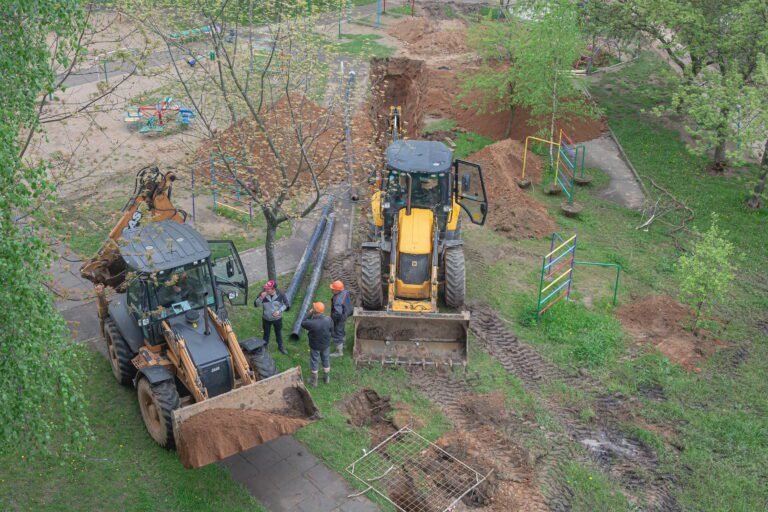
Typical grading permits projects in Washington State use a combination of equipment depending on scope: tracked excavators for digging and loading, bulldozers for bulk grading and clearing, dump trucks for material hauling, and plate compactors or drum rollers for fill compaction. On tight or access-constrained lots, smaller equipment like mini-excavators and skid steers replace larger machines. We assess access constraints during our pre-bid site visit and select equipment accordingly.
Will my property be left in a usable state?
Yes. Our standard project close-out includes site cleanup, removal of excess material and debris, rough grading to a condition suitable for the next construction phase, and installation of erosion control measures required by your permit. We do not leave active erosion hazards or material piles that could migrate to neighboring properties or stormwater systems. If final landscaping or topsoil replacement is part of your project scope, that’s included in the contract and completed before final walkthrough.
Why Choose Brynion Excavation for Grading Permits in Washington State
Brynion Excavation has built a reputation throughout Southwest Washington for straight-forward pricing, reliable scheduling, and site work that holds up through inspection. We handle excavation services, land clearing, site preparation, grading and leveling, drainage solutions, and driveway installation and repair under one contract, so you’re working with one team from start to finish rather than coordinating between multiple subcontractors.
Our crews are experienced with Washington State soil conditions, familiar with local permit offices, and equipped with GPS-guided machinery that delivers precise results efficiently. When we quote a job, we stand behind the number—we don’t use low initial bids to win work and then add change orders for foreseeable conditions.
Get a Free Estimate for Your Washington State Project
Ready to start your grading permits project in Washington State? Brynion Excavation provides free on-site estimates throughout Southwest Washington. Call Brynion Excavation at (360) 555-0193 or submit your project details online for a free on-site estimate. We serve all of Washington State and the surrounding Southwest Washington region.
Scheduling and Timeline Expectations
Project timelines in Southwest Washington depend on permit processing, site conditions, and contractor availability. Permit applications for grading projects typically take 2–6 weeks to process. Active site work for most residential projects takes 3–10 business days. Factor in weather delays during the November–April wet season when planning your schedule. Booking a contractor 3–4 weeks before your desired start date is the minimum; 6–8 weeks is better for projects starting in peak season (June–September).
Working with Brynion Excavation: Our Process
Every Brynion Excavation project begins with a free on-site assessment. We walk the property, review available survey and utility data, discuss your project goals, and identify any site conditions that affect scope or cost. From that visit, we prepare a detailed written estimate that specifies exactly what is and isn’t included. We don’t use vague scope language to win bids and add change orders later. Our estimates are the basis for firm contracts, and our change order process is transparent—you approve all changes before work proceeds.
Throughout the project, we maintain open communication. You’ll know when equipment is arriving, what phase we’re in, and what’s coming next. We coordinate permit inspections, utility locates, and subcontractor scheduling so you don’t have to manage those moving parts. When we’re done, we leave the site in a clean, well-drained condition suitable for the next phase of your project.
Our Southwest Washington service area covers all of Clark, Cowlitz, and Lewis counties, with projects completed in Vancouver, Kelso, Longview, Camas, Woodland, Centralia, and hundreds of rural parcels throughout the region. Call us at (360) 555-0193 or request your free estimate online today.