Turning undeveloped land into a build-ready property involves much more than clearing trees and pouring concrete. Before homes, commercial buildings, parking lots, or infrastructure can be constructed, the land must go through a carefully planned development process designed to create a stable, safe, and functional site.
In Centralia, Washington, site development is especially important because of the region’s rainfall, drainage challenges, varying soil conditions, and environmental considerations. Whether preparing a residential lot for a custom home or developing commercial property for retail, industrial, or office use, every project depends on proper planning and preparation from the ground up.
The process of transforming raw land into a construction-ready site involves several critical steps, including land clearing, excavation, grading, drainage planning, utility preparation, soil stabilization, and erosion control.
This guide explains the major stages involved in residential and commercial site development in Centralia and why each step plays a key role in long-term project success.
Understanding Site Development
Site development is the process of preparing land for future construction.
Raw land often contains:
- Trees
- Brush
- Stumps
- Uneven terrain
- Rocks
- Wet areas
- Existing debris
- Poor drainage conditions
Before builders can begin vertical construction, the property must be transformed into a stable and properly engineered building site.
Site development helps ensure:
- Structural stability
- Proper drainage
- Safe access
- Utility installation
- Erosion control
- Long-term property performance
Both residential and commercial projects rely on these foundational steps.
Step 1: Site Evaluation and Planning
Every successful development project begins with a detailed site evaluation.
Contractors, engineers, and property owners assess the land to identify opportunities and challenges before work begins.
Typical evaluations include:
- Topography analysis
- Soil assessment
- Drainage review
- Environmental considerations
- Access planning
- Utility availability
- Flood risk evaluation
Why Planning Matters
Every property behaves differently.
Some sites may contain:
- Steep slopes
- Soft soil
- Seasonal wetlands
- Heavy vegetation
- Drainage issues
Identifying these conditions early helps developers create effective solutions before construction starts.
Planning also helps determine:
- Equipment needs
- Excavation depth
- Drainage systems
- Grading requirements
- Construction timelines
Proper preparation reduces costly surprises later in the project.
Step 2: Land Clearing and Vegetation Removal
Once planning is complete, the first physical phase of development usually involves clearing the land.
Land clearing removes obstacles that interfere with construction.
Common Land Clearing Tasks
Crews may remove:
- Trees
- Brush
- Shrubs
- Stumps
- Roots
- Dead vegetation
- Rocks
- Debris
The amount of clearing depends on the property size and project goals.
Why Clearing Is Important
Vegetation and organic materials can create instability beneath structures.
For example:
- Roots decay over time
- Organic soil compresses
- Stumps create voids underground
If these materials remain beneath foundations or pavement, settling and structural movement may occur later.
Clearing also improves visibility so contractors can accurately shape and prepare the site.
Selective Clearing vs Complete Clearing
Some projects benefit from preserving portions of existing vegetation.
Selective clearing may help:
- Reduce erosion
- Maintain privacy
- Improve drainage
- Preserve aesthetics
- Protect slopes
Commercial projects often require larger-scale clearing, while residential projects may retain more natural landscaping.
Step 3: Demolition and Existing Structure Removal
Some development sites contain old structures or improvements that must be removed before new construction begins.
This phase may involve removing:
- Old homes
- Barns
- Sheds
- Foundations
- Concrete slabs
- Asphalt surfaces
- Fencing
Demolition crews safely clear the property and prepare it for redevelopment.
Proper Debris Removal Matters
Construction debris left underground can create problems such as:
- Soil instability
- Drainage issues
- Settlement
- Utility interference
Complete removal helps create a clean foundation for development.
Step 4: Excavation and Earthmoving
Excavation reshapes the land according to engineering and construction plans.
This stage creates the correct elevations for:
- Foundations
- Roads
- Parking lots
- Utilities
- Drainage systems
Common Excavation Activities
Excavation crews may perform:
- Soil removal
- Cut-and-fill operations
- Trenching
- Rock excavation
- Slope modification
- Foundation excavation
Cut-and-Fill Operations
Some sites contain uneven terrain.
Contractors may:
- Remove soil from high areas
- Relocate it to lower areas
This process creates a balanced and level building surface.
Importance of Proper Excavation
Poor excavation practices can cause:
- Foundation settlement
- Drainage failure
- Soil instability
- Erosion problems
Accurate excavation helps maintain long-term structural performance.
Step 5: Soil Stabilization and Compaction
After excavation, the soil must be stabilized and compacted.
This is one of the most important steps in site development.
Why Soil Compaction Matters
Loose soil contains air pockets.
Over time, the soil naturally settles under pressure.
Without compaction:
- Foundations may shift
- Pavement may crack
- Sidewalks may sink
- Drainage patterns may change
Compaction increases soil density and load-bearing strength.
Common Compaction Equipment
Crews often use:
- Rollers
- Vibratory compactors
- Plate compactors
Testing may also verify that the soil meets engineering standards.
Soil Stabilization Methods
Some sites require additional stabilization techniques.
Examples include:
- Gravel base installation
- Lime treatment
- Geotextile reinforcement
- Drainage improvements
Stable soil supports the entire construction project.
Step 6: Grading and Site Shaping
Grading shapes the property to control water flow and create proper elevations.
This phase directly affects drainage performance.
Positive Drainage Design
The goal is to move water away from structures.
Proper grading prevents:
- Standing water
- Soil erosion
- Foundation saturation
- Flooding
Water should flow toward designated drainage areas instead of collecting around buildings.
Finish Grading
Final grading smooths the surface and prepares it for:
- Landscaping
- Pavement
- Concrete work
- Final construction
Accurate grading improves both functionality and appearance.
Step 7: Drainage and Stormwater Management
Drainage systems are essential in Centralia due to frequent rainfall and moisture-heavy conditions.
Without proper drainage, water may damage:
- Foundations
- Roads
- Parking lots
- Landscapes
- Retaining walls
Common Drainage Solutions
Site development often includes:
French Drains
These underground systems redirect groundwater away from structures.
Swales
Shallow channels move surface runoff safely across the property.
Catch Basins
Catch basins collect water from paved areas and prevent flooding.
Retention and Detention Systems
Commercial developments often require stormwater storage systems.
These systems reduce runoff impact during heavy rainfall.
Drainage Planning Protects Long-Term Stability
Poor drainage is one of the leading causes of:
- Foundation problems
- Erosion
- Pavement failure
- Water intrusion
Managing water correctly protects the entire investment.
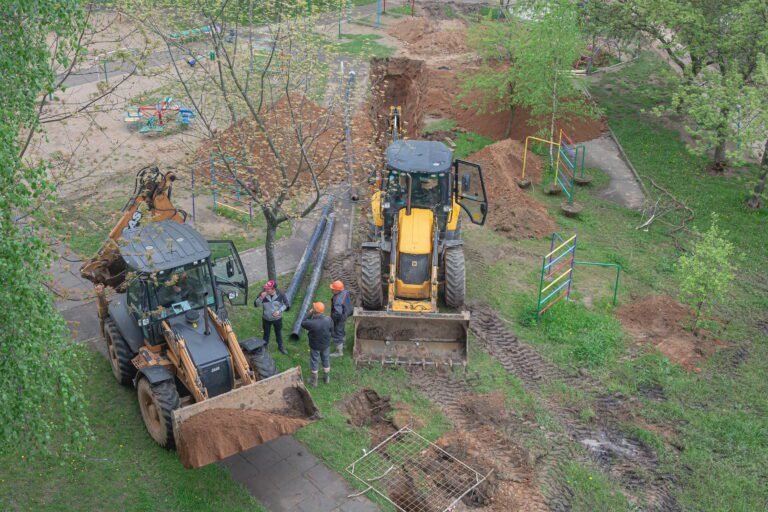
Step 8: Utility Installation and Trenching
Modern developments require access to essential utilities.
Before final construction begins, crews install underground infrastructure.
Common Utility Services
Site development may include trenching for:
- Water lines
- Sewer systems
- Septic systems
- Electrical service
- Gas lines
- Communication lines
- Storm drainage
Utility Coordination Is Important
Careful planning prevents conflicts between systems.
Improper utility installation can create:
- Future excavation needs
- Drainage interference
- Access problems
- Safety concerns
Coordinated trenching improves project efficiency.
Step 9: Erosion Control Measures
Construction sites become vulnerable to erosion once vegetation is removed.
Rainfall can quickly wash exposed soil across the property.
Why Erosion Control Matters
Uncontrolled erosion may cause:
- Sediment runoff
- Drainage blockage
- Slope instability
- Property damage
- Environmental violations
Common Erosion Control Methods
Contractors often use:
Silt Fences
Temporary barriers trap sediment during construction.
Straw Mulch
Mulch protects bare soil from rainfall impact.
Hydroseeding
Fast-growing vegetation stabilizes disturbed soil.
Retaining Walls
Retaining systems support slopes and reduce soil movement.
Erosion control helps preserve site integrity during active construction.
Step 10: Access Roads and Driveway Preparation
Both residential and commercial projects need safe access routes.
This phase may involve building:
- Temporary construction entrances
- Gravel access roads
- Driveways
- Parking areas
Proper Access Improves Construction Efficiency
Stable access routes help:
- Prevent mud tracking
- Protect equipment
- Improve worker safety
- Reduce soil disturbance
Commercial sites often require larger access systems to support heavy traffic.
Step 11: Final Site Preparation for Construction
Once grading, drainage, utilities, and stabilization are complete, the property enters the final preparation stage.
This phase ensures the site is ready for vertical construction.
Final tasks may include:
- Surface smoothing
- Final inspections
- Elevation verification
- Utility testing
- Drainage checks
- Material delivery preparation
At this point, the land has transformed from undeveloped property into a fully prepared construction site.
Residential vs Commercial Site Development
While both project types follow similar steps, commercial developments often involve greater complexity.
Residential Projects
Residential development usually focuses on:
- Home foundations
- Driveways
- Septic systems
- Yard drainage
- Landscaping
These projects are typically smaller in scale.
Commercial Projects
Commercial developments may require:
- Large parking lots
- Stormwater systems
- Utility coordination
- Heavy-duty pavement
- Traffic access planning
- Environmental compliance
Commercial sites usually involve more engineering and regulatory review.
Challenges Commonly Encountered During Site Development
Every property presents unique obstacles.
Common site development challenges include:
Wet Soil Conditions
Excess moisture complicates excavation and compaction.
Steep Terrain
Slopes require stabilization and drainage planning.
Rock Excavation
Large rocks increase excavation complexity.
Drainage Problems
Poor water flow creates erosion and flooding risks.
Unstable Soil
Weak soil may require reinforcement or replacement.
Experienced contractors identify and address these challenges early.
Why Professional Site Development Matters
Proper site development creates the foundation for every successful construction project.
Rushing or skipping preparation stages may lead to:
- Foundation settlement
- Drainage failure
- Pavement cracking
- Erosion
- Structural movement
- Expensive repairs
Professional contractors understand how to coordinate:
- Land clearing
- Excavation
- Grading
- Utility installation
- Drainage planning
- Soil stabilization
Careful preparation improves long-term durability and performance.
Final Thoughts
Transforming raw land into a build-ready property involves far more than basic clearing and excavation. Residential and commercial site development in Centralia requires strategic planning, proper grading, drainage management, utility coordination, soil stabilization, and erosion control.
Each step plays a critical role in creating a safe, stable, and functional construction site.
From initial land clearing to final grading and utility preparation, successful site development helps prevent future issues such as:
- Foundation damage
- Flooding
- Soil settlement
- Drainage failure
- Erosion
- Structural instability
Whether preparing a residential homesite or a large commercial development, investing in professional site preparation creates a stronger foundation for long-term project success.