Building a home or commercial property starts long before the foundation is poured. The condition of the land determines how strong, stable, and long-lasting the structure will be. Yet many homeowners underestimate this stage and assume that once the land looks “cleared and flat,” it is ready for construction.
In reality, land preparation is a technical process involving soil science, drainage engineering, excavation accuracy, and compaction standards. When done incorrectly, it can lead to costly structural damage, water issues, and long-term instability.
In regions like Vancouver, Washington, where rainfall is frequent and soil can vary from sandy to heavy clay, proper land preparation becomes even more critical.
This article explores the most common land preparation mistakes homeowners make and how professional contractors avoid them.
1. Skipping Proper Site Evaluation
One of the biggest mistakes homeowners make is rushing into construction without a detailed site evaluation.
A proper evaluation should analyze:
- Soil type and stability
- Slope and elevation
- Drainage direction
- Vegetation and underground obstacles
- Access for heavy machinery
Without this step, construction begins blindly.
Why this is a problem:
- Weak soil may go unnoticed
- Hidden water tables can affect foundations
- Uneven terrain may cause structural imbalance
How professionals avoid it:
Experts conduct detailed site surveys and geotechnical assessments before any work begins. This ensures the design matches the actual land conditions rather than assumptions.
2. Ignoring Soil Testing
Soil is not the same everywhere. Some soils are strong and stable, while others expand, shift, or retain water.
In areas like Vancouver, Washington, clay-heavy soil is common, which can expand when wet and shrink during dry conditions.
Mistake homeowners make:
They assume soil is “good enough” because it looks solid on the surface.
Problems caused:
- Foundation cracking
- Uneven settling
- Moisture retention around the structure
Professional approach:
Contractors perform soil testing to measure:
- Load-bearing capacity
- Moisture content
- Composition (sand, clay, silt, rock)
If needed, they improve soil through compaction, stabilization, or replacement.
3. Poor Land Clearing Practices
Many homeowners think land clearing simply means removing visible trees and debris. However, improper clearing often leaves behind roots, organic material, and buried obstacles.
Common mistakes:
- Leaving tree stumps in the ground
- Not removing underground roots
- Ignoring buried rocks or debris
- Incomplete clearing of old structures
Why it matters:
Organic material decomposes over time, creating voids in the soil that lead to sinking or shifting foundations.
How professionals handle it:
Professionals remove:
- Trees and root systems completely
- Underground obstructions
- Debris and unstable organic matter
They ensure a clean, uniform base before excavation begins.
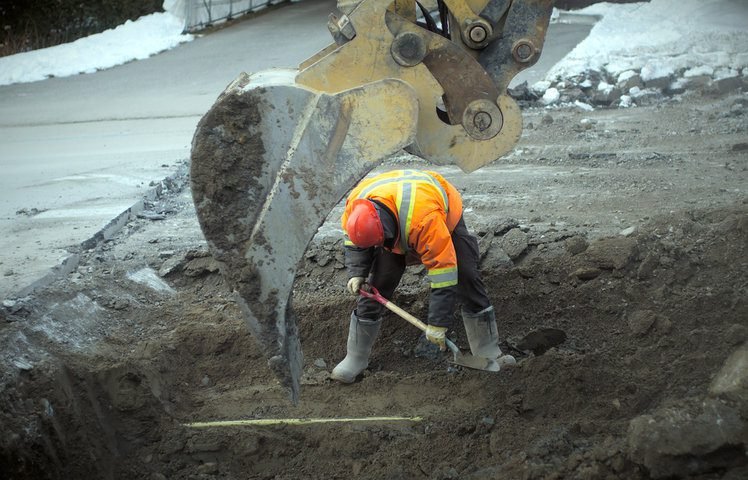
4. Improper Excavation Depth
Excavation is not just digging—it is precise engineering. Many homeowners or inexperienced contractors miscalculate depth requirements.
Mistakes include:
- Digging too shallow for foundations
- Over-excavating and weakening soil layers
- Ignoring frost line or structural requirements
Consequences:
- Weak foundation support
- Water intrusion under slabs
- Structural instability
Professional solution:
Experts follow engineering plans and local building codes to ensure excavation depth matches structural requirements and soil conditions.
5. Neglecting Proper Grading
Grading determines how water flows across the property. Poor grading is one of the leading causes of long-term property damage.
Homeowner mistakes:
- Leaving flat surfaces that trap water
- Sloping land toward the building
- Uneven soil distribution
Problems caused:
- Standing water near foundations
- Basement flooding
- Soil erosion
Professional grading methods:
Professionals carefully shape the land to ensure:
- Water flows away from structures
- Controlled slope angles
- Balanced cut-and-fill techniques
This is especially important in high-rainfall regions like Vancouver, Washington.
6. Poor Drainage Planning
Water management is one of the most overlooked aspects of land preparation.
Common mistakes:
- No drainage system design
- Ignoring natural water flow
- Relying only on surface slope
Consequences:
- Foundation water damage
- Soil erosion
- Mold and moisture problems inside buildings
Professional approach:
Experts design drainage systems such as:
- French drains
- Gravel trenches
- Stormwater channels
- Subsurface drainage pipes
These systems ensure water is safely directed away from structures.
7. Inadequate Soil Compaction
Loose soil is one of the biggest threats to structural stability.
Mistakes homeowners make:
- Skipping compaction entirely
- Compaction done unevenly
- Using improper equipment
Risks:
- Foundation settling
- Cracks in walls and floors
- Uneven building surfaces
Professional solution:
Contractors compact soil in layers using heavy machinery, ensuring:
- Air pockets are removed
- Density is uniform
- Load-bearing strength is improved
8. Ignoring Utility Planning
Underground utilities must be carefully planned before construction begins.
Common mistakes:
- Installing utilities after foundation work
- Not marking utility lines properly
- Poor coordination between teams
Problems caused:
- Damage to pipes or cables during excavation
- Expensive rework
- Project delays
Professional approach:
Professionals coordinate with utility providers and ensure:
- Proper mapping of all underground lines
- Safe routing of water, sewer, and electrical systems
- Compliance with local regulations
9. Overlooking Erosion Control
Soil erosion can quickly destroy a poorly prepared site, especially in wet climates.
Homeowner mistakes:
- No erosion barriers
- Leaving soil exposed during construction
- Ignoring rainwater runoff
Consequences:
- Loss of topsoil
- Unstable ground conditions
- Environmental damage
Professional solutions:
Contractors use:
- Silt fencing
- Temporary vegetation cover
- Retaining structures
- Gravel stabilization
These measures protect the site throughout construction.
10. Not Following Local Building Codes
Every construction project must comply with local regulations, but many homeowners are unaware of these requirements.
Mistakes include:
- Ignoring permits for excavation
- Skipping soil testing documentation
- Failing to meet grading standards
Consequences:
- Legal penalties
- Construction delays
- Forced redesigns
Professional advantage:
Experts are familiar with local codes and ensure all work meets compliance standards from the start.
11. Underestimating Site Access Requirements
Heavy machinery needs proper access to the construction site.
Mistakes:
- Narrow entry paths
- No planning for equipment movement
- Ignoring terrain limitations
Problems:
- Delays in excavation work
- Increased labor costs
- Safety risks
Professional approach:
Contractors plan:
- Equipment entry routes
- Safe maneuvering space
- Material storage areas
This improves efficiency and safety.
12. Poor Timing and Weather Planning
Land preparation is heavily affected by weather conditions.
Homeowner mistakes:
- Starting excavation during heavy rain
- Ignoring seasonal soil conditions
- Poor scheduling of work phases
Risks:
- Muddy and unstable ground
- Delayed construction timelines
- Increased cost due to rework
Professional approach:
Experts schedule land preparation based on:
- Seasonal weather patterns
- Soil moisture levels
- Project timelines
Conclusion
Land preparation is one of the most important stages in any construction project, yet it is often underestimated by homeowners. Mistakes made during this phase can lead to long-term structural damage, drainage issues, and costly repairs.
In regions like Vancouver, Washington, where soil conditions and rainfall can create additional challenges, proper planning and execution become even more essential.
Professional contractors avoid these mistakes through careful evaluation, engineering expertise, proper equipment, and compliance with local standards. From soil testing and grading to drainage and compaction, every step is designed to ensure a safe, stable, and long-lasting foundation.
A well-prepared site is not just the first step in construction—it is the most important investment in the life of the structure.