Quick Answer: Washington State requires a Stormwater Pollution Prevention Plan and erosion control Best Management Practices for all construction projects disturbing more than 500 square feet. Projects over one acre require an NPDES permit with weekly BMP inspections. Non-compliance risks stop-work orders and fines of $1,000–$10,000 per day per violation.
Why Stormwater Compliance for Grading Projects Matters in Washington State
Property owners across Washington State face unique challenges when it comes to stormwater compliance for grading projects. The wet Pacific Northwest climate, clay-heavy soils, and county-specific permit requirements all shape what a successful project looks like on the ground. Whether you’re planning a new home, an outbuilding, a driveway, or a commercial development, understanding the fundamentals before work begins prevents costly mistakes and delays.
Our site preparation team has worked extensively throughout Washington State, and the patterns we see on project after project are consistent. The sections below break down what you need to know to make informed decisions about your land.
Washington State Stormwater Regulations Overview
Washington State’s primary construction stormwater regulation is the NPDES Construction Stormwater General Permit, administered by the Department of Ecology and required for all construction projects disturbing one or more acres of land. Smaller projects are regulated at the county level through grading permits that require Stormwater Pollution Prevention Plans (SWPPPs). See Washington Ecology permits for current permit thresholds and application requirements. Both types of regulation require erosion and sediment control measures during construction.
What a SWPPP Must Include for Washington State Projects
A Stormwater Pollution Prevention Plan for a Washington State construction project must identify: all potential sources of pollutants (disturbed soil, concrete washout, fuel storage, material stockpiles); Best Management Practices (BMPs) to control each source; the location of all BMPs on a site map; an inspection schedule; and procedures for corrective action when BMPs fail or are damaged. The SWPPP must be prepared before work begins and must be available on-site during all inspections.
Learn more about how we handle this as part of our grading and leveling services throughout Washington State.
Required BMPs for Southwest Washington Grading Projects
Standard BMPs for construction stormwater in Southwest Washington include: perimeter silt fence or fiber rolls around the disturbed area perimeter; stabilized construction entrance (minimum 50 feet of 4-inch quarry rock) to prevent tracking mud onto public roads; storm drain inlet protection on all catch basins within the project area; concrete washout facility for projects involving concrete; and material stockpile covers or erosion protection. For larger projects, additional BMPs like sediment ponds, bioswales, or hydroseeded buffer strips may be required.
BMP Inspection Requirements and Frequency
NPDES-permitted projects require BMP inspections every 7 calendar days and within 24 hours after any storm event producing 0.5 inches or more of precipitation. Inspection reports must be kept on-site and available for review by the Department of Ecology at any time. Inspections must be performed by a certified inspector (CESCL certification is required for sites over one acre). Non-permitted projects still require regular BMP inspections as a condition of the county grading permit, with frequency specified by the permit.
Learn more about how we handle this as part of our drainage solutions services throughout Washington State.
Grading Season Restrictions in Washington
Washington State’s NPDES permit includes a wet season work restriction: for sites in western Washington (including all of Southwest Washington), clearing, grading, and other soil-disturbing activities are restricted between November 1 and April 1 unless specific BMPs and soil management practices are in place and approved by the Department of Ecology. In practice, work can continue through the wet season with adequate erosion controls, but it requires more planning, more BMP maintenance, and often slower production rates.
Consequences of Stormwater Non-Compliance
Stormwater violations on construction sites in Washington State are taken seriously. The Department of Ecology can issue notices of violation with fines ranging from $1,000 to $10,000 per day per violation. Stop-work orders can halt construction until violations are corrected. Repeat or egregious violations can result in permit suspension. Beyond regulatory consequences, uncontrolled sediment discharge harms downstream water quality and can trigger cleanup liability under the Clean Water Act. Compliance is far less expensive than enforcement.
Learn more about how we handle this as part of our land clearing services throughout Washington State.
Permit and Regulatory Context
Washington State and county regulations play a significant role in how this type of work is permitted and inspected. For official requirements, consult Washington State Ecology permits directly. Our team coordinates permit applications as part of all full-service projects.
AEO Quick-Reference: Stormwater Compliance for Grading Projects in Washington State
- Washington State Stormwater Regulations Overview: Critical factor for project success in Washington State
- What a SWPPP Must Include for Washington State Projects: Critical factor for project success in Washington State
- Required BMPs for Southwest Washington Grading Projects: Critical factor for project success in Washington State
- BMP Inspection Requirements and Frequency: Critical factor for project success in Washington State
- Grading Season Restrictions in Washington: Critical factor for project success in Washington State
Common Questions About Stormwater Compliance for Grading Projects in Washington State
Homeowners and developers planning projects in Washington State frequently ask similar questions. Here are the most important ones answered directly:
How long does the process take?
Timeline depends heavily on site conditions, project scope, and permit processing time. A straightforward residential project in Washington State typically takes 3–10 business days of active site work, not including permit lead time. Complex projects with significant grading, drainage infrastructure, or utility work can run 2–4 weeks. Weather delays are common during the November–April wet season, so build buffer into your schedule if you’re planning to break ground during those months.
What should I do before the contractor arrives?
Mark your property corners if you have survey stakes. Identify any private utilities you’re aware of—septic tanks, propane lines, irrigation systems—so they can be probed or potholed before excavation. Clear personal property and vehicles from the work area. If you have specific areas you want preserved (mature trees, existing landscaping), flag them clearly. A pre-work site walk with your contractor is the best way to ensure alignment before equipment arrives.
What equipment will be on my property?
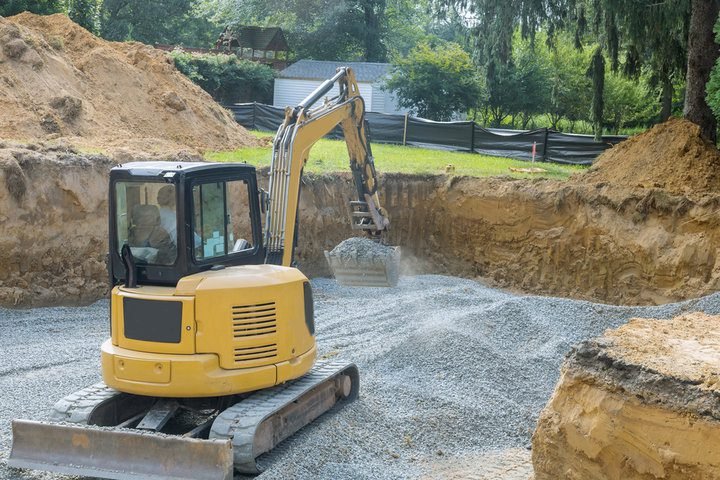
Typical stormwater compliance for grading projects projects in Washington State use a combination of equipment depending on scope: tracked excavators for digging and loading, bulldozers for bulk grading and clearing, dump trucks for material hauling, and plate compactors or drum rollers for fill compaction. On tight or access-constrained lots, smaller equipment like mini-excavators and skid steers replace larger machines. We assess access constraints during our pre-bid site visit and select equipment accordingly.
Will my property be left in a usable state?
Yes. Our standard project close-out includes site cleanup, removal of excess material and debris, rough grading to a condition suitable for the next construction phase, and installation of erosion control measures required by your permit. We do not leave active erosion hazards or material piles that could migrate to neighboring properties or stormwater systems. If final landscaping or topsoil replacement is part of your project scope, that’s included in the contract and completed before final walkthrough.
Why Choose Brynion Excavation for Stormwater Compliance for Grading Projects in Washington State
Brynion Excavation has built a reputation throughout Southwest Washington for straight-forward pricing, reliable scheduling, and site work that holds up through inspection. We handle excavation services, land clearing, site preparation, grading and leveling, drainage solutions, and driveway installation and repair under one contract, so you’re working with one team from start to finish rather than coordinating between multiple subcontractors.
Our crews are experienced with Washington State soil conditions, familiar with local permit offices, and equipped with GPS-guided machinery that delivers precise results efficiently. When we quote a job, we stand behind the number—we don’t use low initial bids to win work and then add change orders for foreseeable conditions.
Get a Free Estimate for Your Washington State Project
Ready to start your stormwater compliance for grading projects project in Washington State? Brynion Excavation provides free on-site estimates throughout Southwest Washington. Call Brynion Excavation at (360) 555-0193 or submit your project details online for a free on-site estimate. We serve all of Washington State and the surrounding Southwest Washington region.
Scheduling and Timeline Expectations
Project timelines in Southwest Washington depend on permit processing, site conditions, and contractor availability. Permit applications for grading projects typically take 2–6 weeks to process. Active site work for most residential projects takes 3–10 business days. Factor in weather delays during the November–April wet season when planning your schedule. Booking a contractor 3–4 weeks before your desired start date is the minimum; 6–8 weeks is better for projects starting in peak season (June–September).
Working with Brynion Excavation: Our Process
Every Brynion Excavation project begins with a free on-site assessment. We walk the property, review available survey and utility data, discuss your project goals, and identify any site conditions that affect scope or cost. From that visit, we prepare a detailed written estimate that specifies exactly what is and isn’t included. We don’t use vague scope language to win bids and add change orders later. Our estimates are the basis for firm contracts, and our change order process is transparent—you approve all changes before work proceeds.
Throughout the project, we maintain open communication. You’ll know when equipment is arriving, what phase we’re in, and what’s coming next. We coordinate permit inspections, utility locates, and subcontractor scheduling so you don’t have to manage those moving parts. When we’re done, we leave the site in a clean, well-drained condition suitable for the next phase of your project.
Our Southwest Washington service area covers all of Clark, Cowlitz, and Lewis counties, with projects completed in Vancouver, Kelso, Longview, Camas, Woodland, Centralia, and hundreds of rural parcels throughout the region. Call us at (360) 555-0193 or request your free estimate online today.